Fence Installers Melbourne: The Relevance of Expert Measuring
A fence looks simple from the road. Blog posts enter, rails line up, panels or paling sit where they should, work done. The truth on the ground is messier. Minor incline, old yard beds that shifted in time, a limit line that is much more "finest assumption" than flawlessly straight, and the type of swing in hardwood that makes you examine your own eyes.
That is why fence installers Melbourne who take gauging seriously tend to get better results than teams who treat it like a procedure. Specialist measuring is not about fancy tools or slowing down the job down. It is about preventing the costly sort of rework, the aesthetic kind of errors, and the debate sort of surprises.
I have actually enjoyed a respectable fencing come to be irritating within days, not due to the fact that the workmanship was poor, yet since the format and dimensions were negligent. Once you set up one area slightly off, the fencing does not just stay off. It substances. That is the part most individuals do not see until they are standing there with a measuring tape, wishing they had paid attention to the fence installer.
What "professional measuring" actually means
When a person says they will "gauge appropriately," it can seem vague. In technique, specialist measuring is a series of choices made prior to the initial article hole obtains dug.
A thorough fence installer deals with the site like a puzzle with real constraints. They inspect degrees, they confirm useful positioning, they take into consideration just how entrance openings will certainly sit, and they make up just how products will in fact be set up. If you are installing fence in Melbourne suburban areas, you will certainly additionally take care of weather history. Dirt that is bouncy after damp spells, remaining soft places near downpipes, and ground that looks company up until the auger bites.
Measuring is not just about length. It is about positioning. A professional actions:
- where blog posts will sit in connection to the border and the fencing line
- how the fence will certainly adhere to the contour of the land, not combat it
- what occurs at corners, existing frameworks, and any abnormalities in the yard
Those choices affect everything that complies with, including just how much product you will use, exactly how neatly panels line up, and whether you end up with narrow "cut" sections that look out of place.
The surprise expense of getting dimensions wrong
There are 2 types of measurement mistakes. The tiny, technological ones and the larger, architectural ones.
Small mistakes are the ones that appear as "something really feels off." A rail might not be quite degree. A paling could rest at a slightly various spacing contrasted to the remainder. The fence could look penalty from a distance, yet up close, the eye captures every inconsistency.
Larger mistakes can become real money issues. If the fencing line is placed as well far one way, you may need to readjust entrance places or redo a panel run. If the incline is not made up, you can wind up with gaps near the bottom or a top edge that looks like it is attempting to wander away from degree. If corners are misjudged, you might discover you do not have enough area for the final area, which compels uncomfortable adjustments later.
I bear in mind a job a few years back where a home owner was persuaded the fencing would certainly be "close sufficient." The preliminary layout was noted with string and a couple of fast checks, but the real ground shape was more irregular than expected. By the time the team obtained a 3rd of the way along, the fencing line began to "stairway action" visually in a way that the homeowner could not disregard. The fix suggested pulling and redoing a section instead of just cutting panels. That transformed what must have been a clean install into a two-stage task, and everyone was naturally annoyed.
Professional measuring is primarily regarding stopping the type of mistake that leads to remodel time.
Melbourne terrain and why it matters for measuring
Melbourne lawns differ hugely. Even on the exact same road, one home can be flat while the next has a noticeable decline behind your house. Include tree origins, old paving sides, drain lines, and yard beds that were built enough time ago for the ground to settle. A fence installer Melbourne that functions consistently in the region recognizes these patterns.
A measuring process that neglects terrain often tends to create one of three results:
- The fencing follows the ground as well strictly, creating weird spaces and mismatched aesthetic lines.
- The fencing gets "squashed" synthetically, causing lower gaps or panels that do not rest naturally.
- The fencing winds up level in the wrong area, where the top line looks straight however the fence shows up to combat the slope.
A knowledgeable measurer will determine exactly how the fence must treat the land. As an example, should the fence step with the contour, or should it be made to look visually level by utilizing adjustable footing depth or constant panel decrease? There is no single right solution, however there is an incorrect method, and the wrong technique is hardly ever obvious up until after installation.
When measuring is done effectively, the strategy includes how the fence will visually check out throughout the lawn. That is where professionalism shows.
Boundary lines, offsets, and the real-world layout
Most home owners are thinking, "Just build it on the limit." In reality, fencing positioning frequently entails offsets and practical decisions.
Sometimes the limit line is not where you can virtually position posts because of existing frameworks, services, drainage, or the wish to maintain the surround a constant position about your home. Sometimes a fence is mounted on one side of the boundary line with an arranged offset to match landscape design, gain access to courses, or future maintenance.
A fencing installer Melbourne need to review the strategy prior to determining is finalised. If they are determining initially and discussing later, you run the risk of discovering late that the fencing line is not where you thought it would be.
An excellent measuring process consists of:
- checking the desired fencing line relative to limits and any concurred offsets
- confirming where gate openings will certainly go so the fence does not force uncomfortable gate angles
- considering exactly how existing fences, wall surfaces, or preserving aspects will certainly be matched
That is also where conflicts get stopped. Clear measuring and a recorded format reduce the possibility of "That is not where we assumed it would certainly be" later on.
Measuring isn't simply measuring tape length
Yes, a tape measure matters. Yet professional measuring is greater than pulling out a tape and reading a number.
A crew that takes determining seriously usually makes use of devices and techniques that aid them see what the eye could miss out on:
- checking levels so rails and top lines can be mounted consistently
- marking article settings properly so edges and straight areas stay true
- identifying where the fence line might need to break about obstacles
- measuring diagonal ranges when the yard is not a simple rectangle
That angled check sounds like overkill till you have a fence that is "straight" in a single direction, however plainly turned when you see it from the side. The common cause is a corner placement that is mathematically close however literally incorrect for the real geometry of the backyard. Appropriate measuring catches that early.
If you are paying for fence installers and fencing installer expertise, you are paying for the capability to take a look at the site and develop a professional fencing contractor plan that works in three measurements, not just on paper.
The gateway problem: where gauging mistakes become obvious
Gates reveal measurement errors quicker than anything else. A fence might look appropriate with a slightly off panel, due to the fact that wood and spacing can hide small variances. Gates do not. They require proper clearances, correct swing arcs, and right positioning relative to posts.
When measuring is done properly, gate openings get dealt with as their own layout task. The installer requires to consider:
- the width of the gate structure and just how it sits in between posts
- the thickness of rails and the method panels will be connected around the opening
- the goal where the gate meets the fence panels
- ground degrees near the hinge and lock points
I have seen entrances mounted after a determining technique that thought "the opening is the opening." Later on, eviction would bind or rest with uneven voids that were difficult to overlook. Occasionally a small change in message depth addresses the problem, yet when the opening was located improperly in the first place, the fix can become a bigger job.
Professional measuring avoids that sort of frustration.
Spacing, hardwood motion, and why "specific" is not constantly the goal
Another refined point that experienced fencing installers find out is that determining for a fence is partly regarding creating for installment reality.
Timber and some fencing systems can relocate with wetness and temperature. Even if the elements are reduced flawlessly, small adjustments can change how spacing looks once whatever is put together. That is one reason many trustworthy fence installers do not just measure "exactly equal lengths" from one end to the various other and hope it works out.
They prepare for practical installation resistances. That might imply choosing where the last cut section goes, aiming to maintain the "narrow little bits" at the least noticeable areas, and ensuring railway stay consistent.
When measuring is sloppy, the "slim bits" often tend to turn up in noticeable locations, like right at eye degree near the entrance. Also if the fence is structurally fine, it will appear like an afterthought, because it is an afterthought required by a dimension issue.
Professional measuring is, partially, about aesthetic balance.
An example from a normal Melbourne back garden
Let me paint a sensible scenario.
Imagine a yard where one side inclines down toward a clothesline area. There are mature shrubs near the edge, the ground is uneven around where the posts would preferably go, and there is a slim path that needs clear gain access to. The home owner desires the fencing to look neat and constant, not like it is reacting to every bump in the lawn.
An expert determining browse through will usually entail walking the fencing line several times, inspecting sightlines, and noting tentative post settings. The installer might measure from a fixed point, like an outside wall surface edge, and cross-check distances to ensure the fencing line corresponds and not drifting.
They will certainly additionally think about how the fencing changes around the path. Maybe the fence needs to tip down somewhat, maybe it needs constant elevation panels with bottom gaps handled in a particular method, or possibly a somewhat different post placement is required so the edge does not look squeezed.
Then, when the plan is secured, the actual setup ends up being simpler. Messages enter the intended places, rails align, and the end sections do not end up appearing like unpleasant patchwork.
That difference is the benefit of specialist measuring. It is not remarkable. It is the absence of drama.
What you must ask your fence installer prior to determining is final
If you want to determine whether a fence installer takes gauging seriously, you can ask concerns that force specifics. You do not require to end up being technical. You simply need to hear whether they analyze the site.
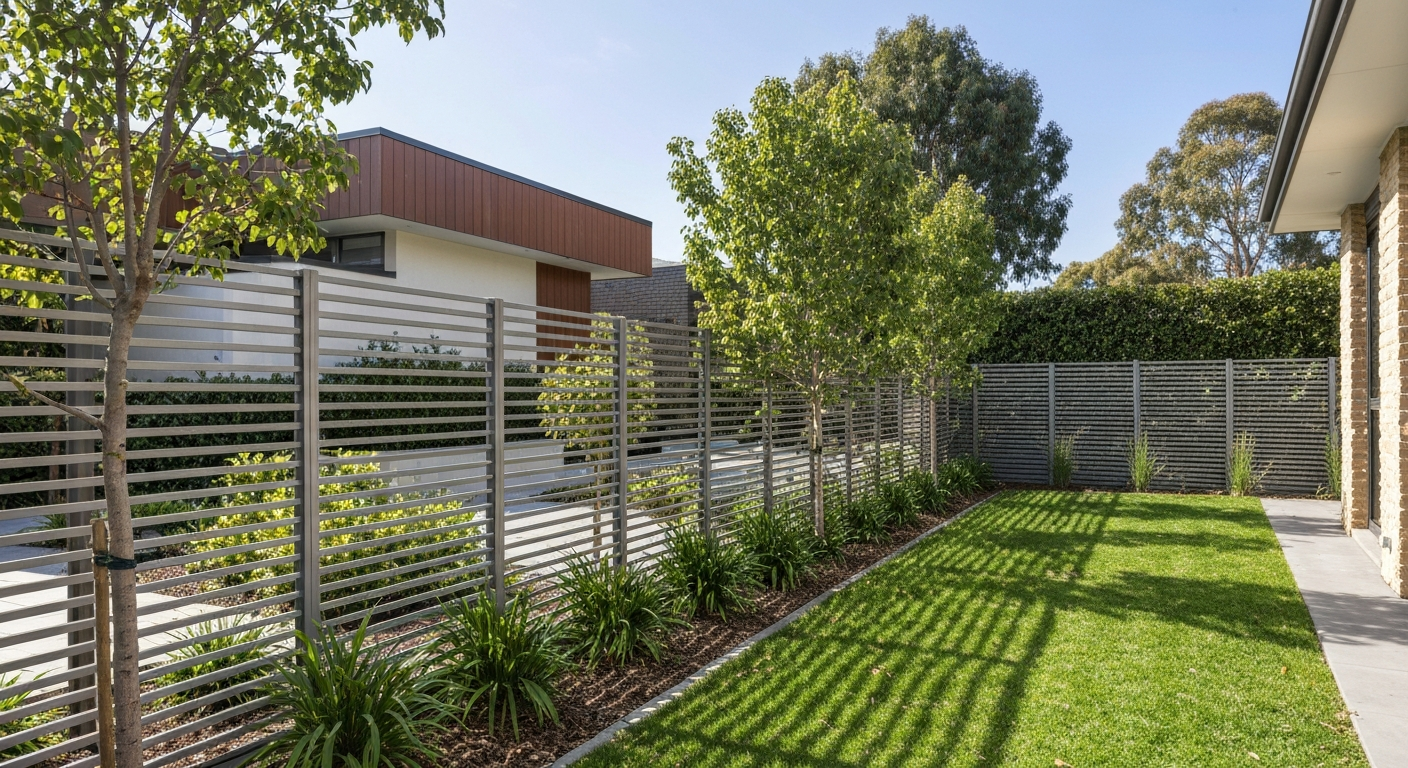
Try asking how they figure out the fence line, how they account for slope, and exactly how they handle gateway openings. A thoughtful fencing installer Melbourne need to be able to describe their method without obtaining vague.
Here are a few inquiries that often tend to disclose real process:
- How do you validate the fence line about the limit and any kind of agreed offset?
- How do you determine and plan for incline so the rails and fence look straight?
- Where will you place any kind of cut areas, and how do you determine what remains visible?
- How do you measure for eviction available to prevent spaces or binding later?
- Do you re-check dimensions on site prior to you begin digging, and how?
Good installers will address with specifics tied to your backyard, not common declarations. If they can not, or if they rush past these inquiries, that is a red flag.
The gauging list pros have a tendency to follow
Different installers have various techniques, but the best fence installers Melbourne typically adhere to a disciplined measuring circulation. You do not require to copy their tools to understand the form of the process. Consider it like preparing an image make-up. If you obtain the framing right initially, the last photo looks intentional.
Here is the sort of measuring checklist you intend to see shown in their explanation, not necessarily as an actual list on site:
- verify referral points for the fencing line
- check degrees and make a decision exactly how the fence will certainly tip or preserve height
- mark blog post settings and re-check positioning, consisting of corners
- confirm gate opening up measurements and clearance
- plan where cut panels or end modifications will certainly land visually
If you listen to these principles covered, it generally implies measuring is treated as a crucial component of the work as opposed to a box to tick.
When DIY determining fails, and why it is fixable, up until it is n'thtmlplcehlder 184end.
DIY can be fine. Many individuals manage their own fences effectively, especially on basic, flat blocks with clear boundaries and no gateways. The danger rises with complexity.
DIY measurement frequently fails in 3 places:
First, individuals measure just one dimension and think the lawn is square. In actual lawns, it could not be, and an edge can drift without you seeing up until later.
Second, individuals focus on article placements yet disregard rail and panel layout. If you recognize the fencing line size but you do not plan exactly how panels will sit around that length, you end up with end cuts in the wrong place or inconsistent spacing.
Third, individuals mark whatever in the enjoyment of "we prepare to dig," yet they miss the re-check once the stakes remain in the ground. Wind, a minor change in string line, or a tape hooked on unequal ground can develop small errors that come to be permanent once openings are dug.
If you capture the problem early, you can change. If you do not, you can invest more time redesigning job than you would certainly have invested getting a specialist measurer to begin with.
What makes a fence installer "excellent" beyond measuring
Professional measuring is the structure, yet it is not the whole tale. An excellent fence installer is also constant in handiwork and respectful with your building. Gauging informs you exactly how the fencing will be planned. Installment informs you exactly how that plan comes to be reality.
Still, gauging is where lots of top quality distinctions show up early. If the design is right, rails line up even more normally, blog post positioning is accurate, and the last fence looks like it belongs there.
A solid gauging procedure likewise decreases consumer stress and anxiety. Rather than hoping things will work out, you obtain a clear plan and fewer surprises.
The long-term payoff of doing it properly
A fencing is not a short-term task. Also if you repaint or replace panels in time, the post format and general placement remain. That is why gauging matters for sturdiness and maintenance.
When fences are mounted with proper planning, you have a tendency to see:
- more consistent straightness over time
- fewer stress and anxiety factors at edges and near gates
- easier panel replacement later because spacing and positioning were intentional
- a cleaner visual outcome that holds up as plants expand and seasons change
A fence that is "mostly great" could survive, however it normally becomes a resource of recurring annoyance. You discover the jagged area when you cut. You see the slight void near the gate when you close it. You see it every single time you come home.
A fence that is planned with professional measuring discolors into the history, which is exactly what a great fence needs to do.
Choosing Fence installers Melbourne with the appropriate measuring mindset
If you are contrasting quotes, you might see differences in rate and timeline. Those differences can be genuine, but in some cases they are even if one installer is more thorough.
Do not think the cheapest deal is the very best value. If measuring is rushed, you could pay later via extra work, additional products, or a remodel that no one enjoys.
The pleasant spot is an installer who connects plainly, actions attentively, and builds a design that matches your yard, your entrance needs, and exactly how you want the fencing to look from day one.
That is exactly how you end up with something strong, neat, and correctly straightened, not a fence that constantly feels like it is waiting for a fix.
If you desire a fencing that looks right, features smoothly, and avoids the messy "what happened here" minutes, specialist measuring is where the top quality starts.